Crown Disco
A five-floor tile game where every tap answers back, designed end to end: rules, UX, UI, win popups and a playable prototype.
A mini-game concept built around one question: how do you make a simple tap feel rewarding, fair and worth coming back to? I designed the rules, the economy, the screens, the win celebration and a playable prototype.
Make the classic tile game feel like a climb.
A casual mini-game inspired by Minesweeper, with a five-step progression: finish a board to unlock the next. Tiles can hold a prize, nothing, a loss, or a special tile that clears the board and pays an extra reward.
I turned it into Crown Disco: a VIP night where a crowned corgi leads you up five floors, dodging bombs and hunting for the disco ball.
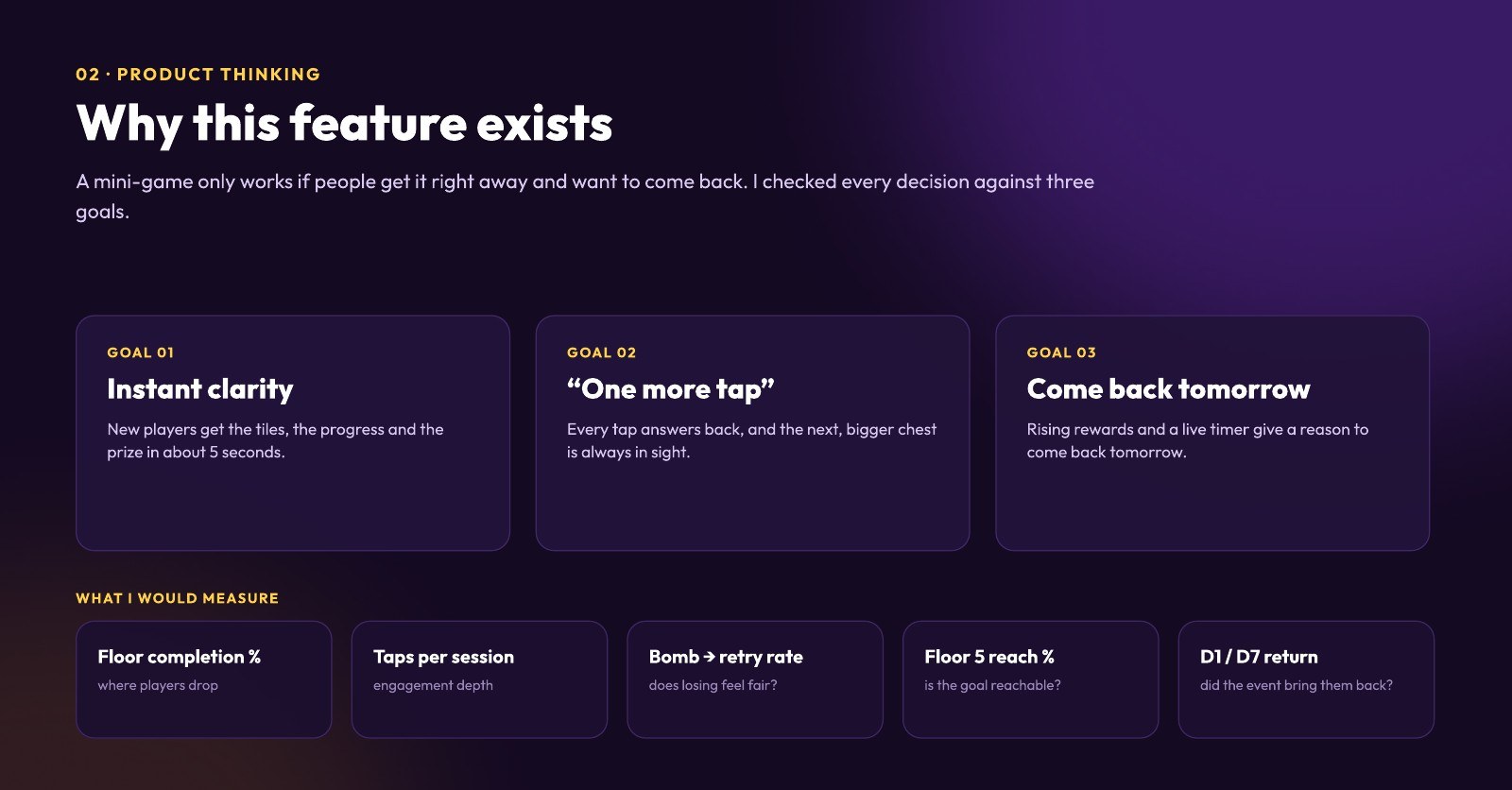
Three goals behind every decision.
A mini-game works only if people get it right away and want to come back. I checked every layout, rule and animation against clarity in five seconds, “one more tap”, and a reason to return tomorrow.
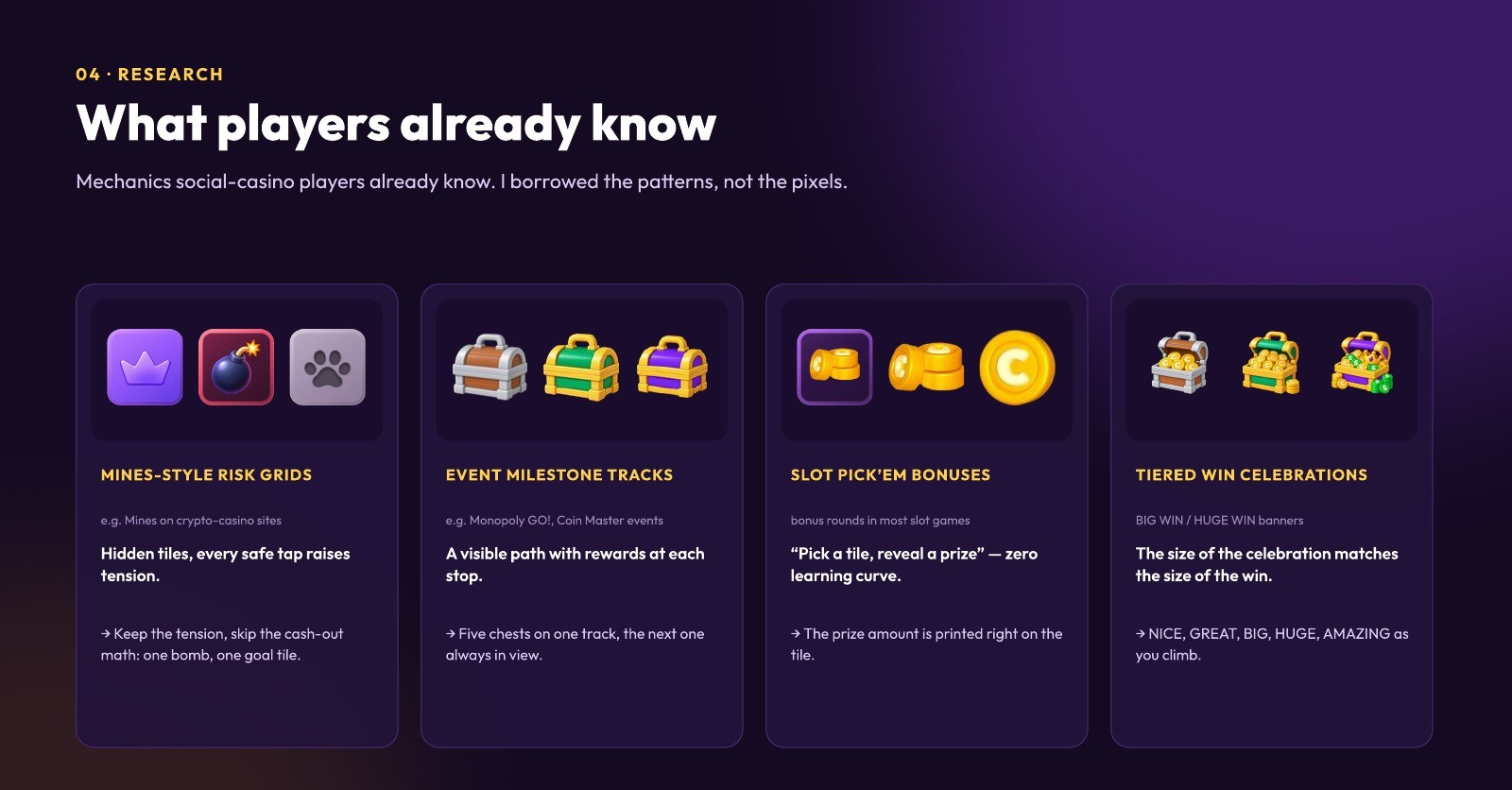
Borrow the patterns, not the pixels.
I looked at mechanics social-casino players already know: risk grids, event milestone tracks, pick-’em bonuses and tiered celebrations. Keep the tension, skip the cash-out math, and show the next reward at all times.
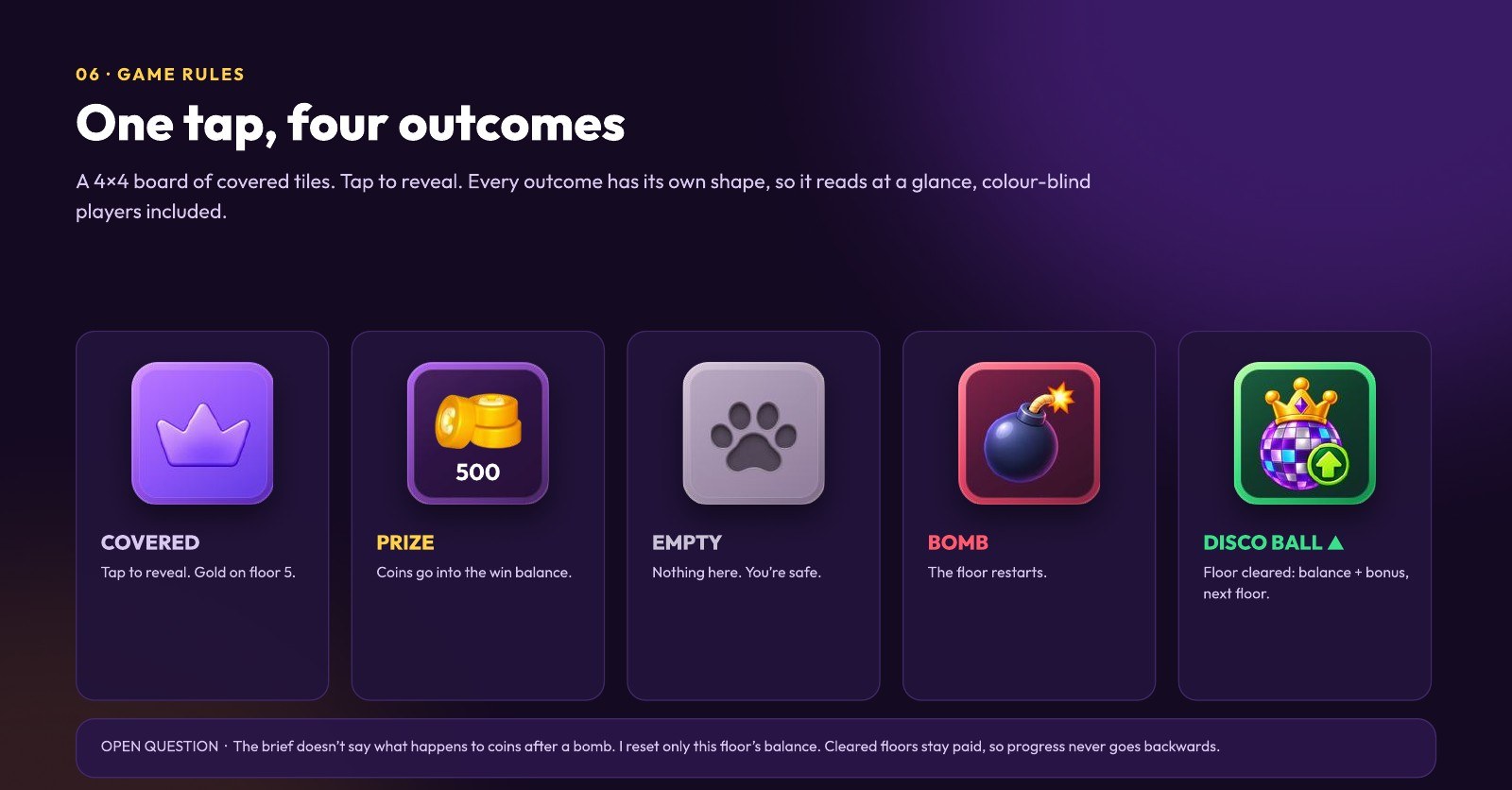
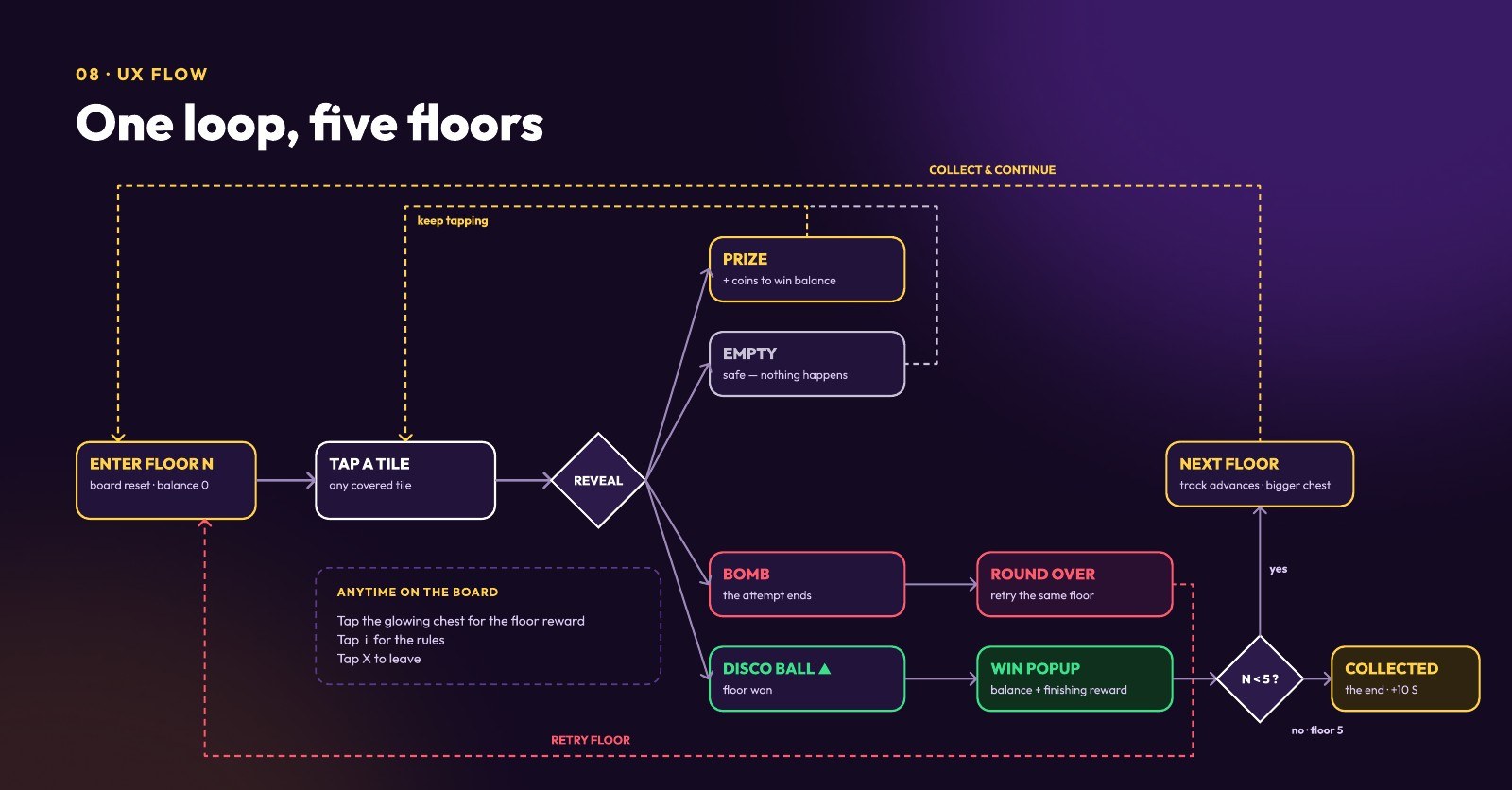
One tap, four outcomes.
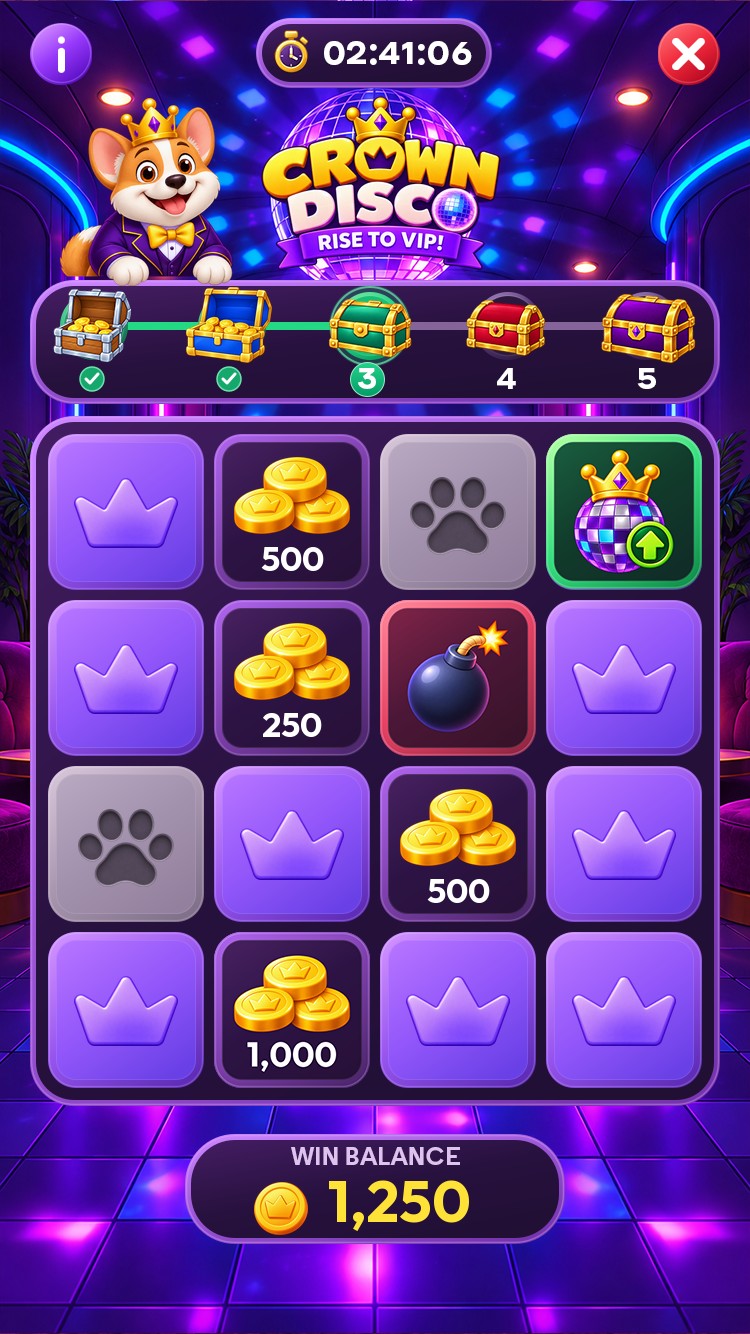
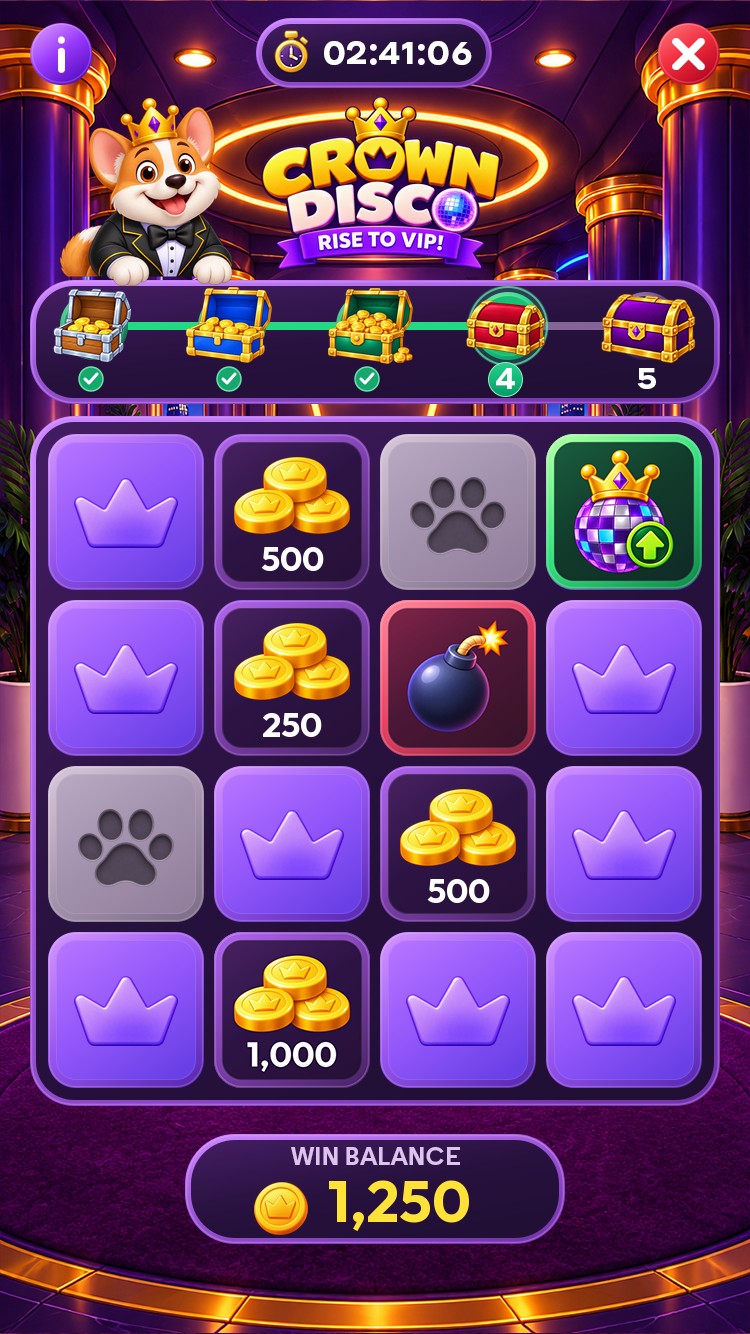
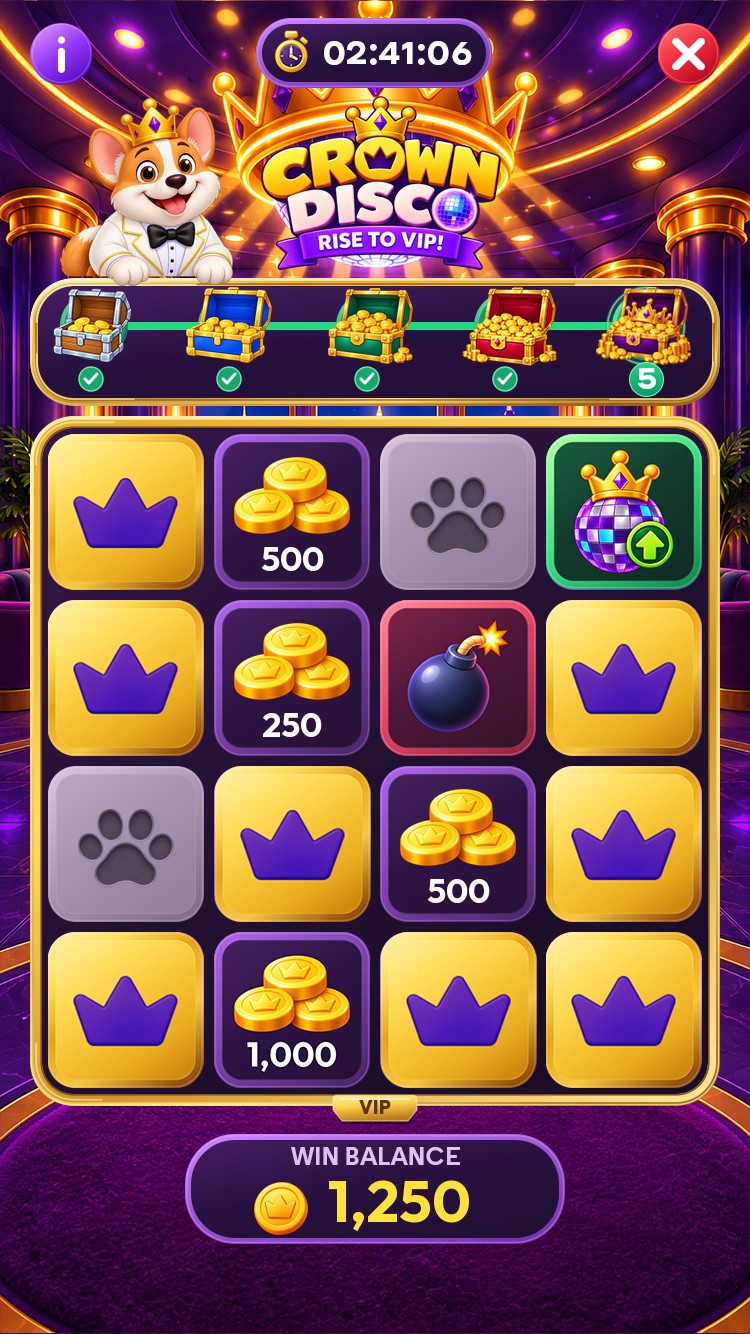
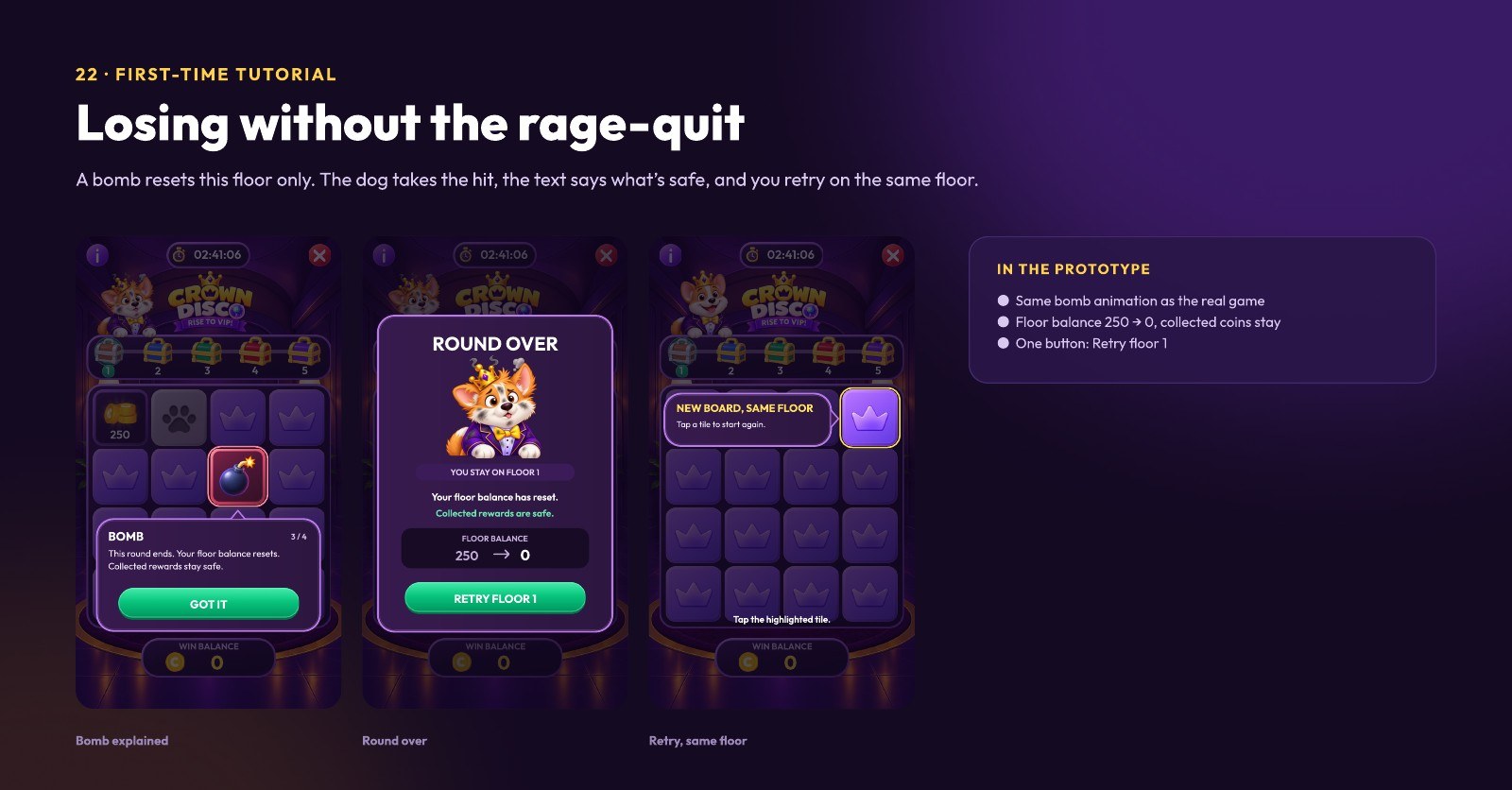
A 4×4 board of covered tiles. Every outcome has its own shape and colour, so it reads at a glance, colour-blind players included. A bomb resets only the current floor, so cleared floors stay paid and progress never goes backwards.
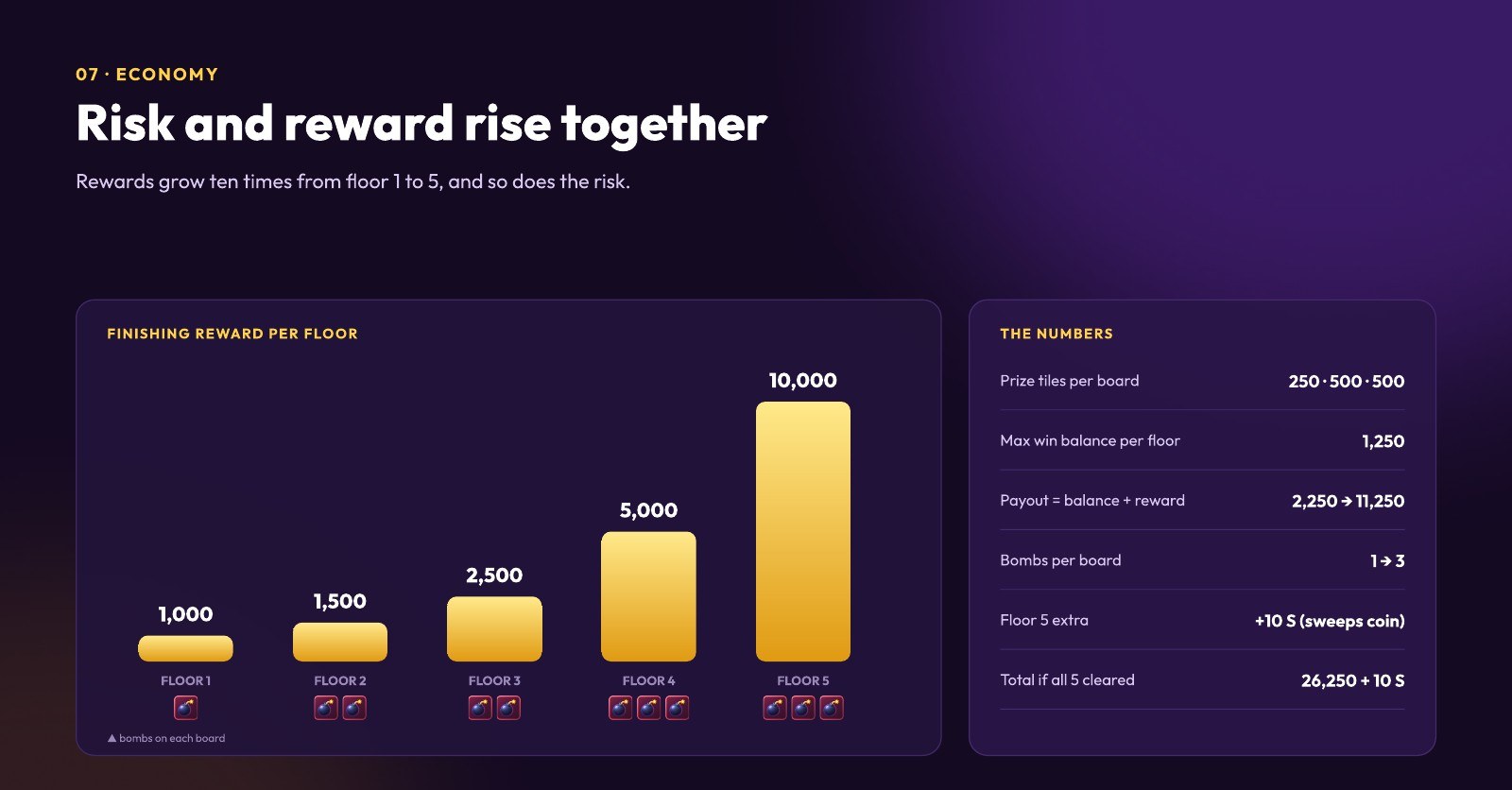
Rewards grow tenfold from floor 1 to floor 5, and so does the risk.
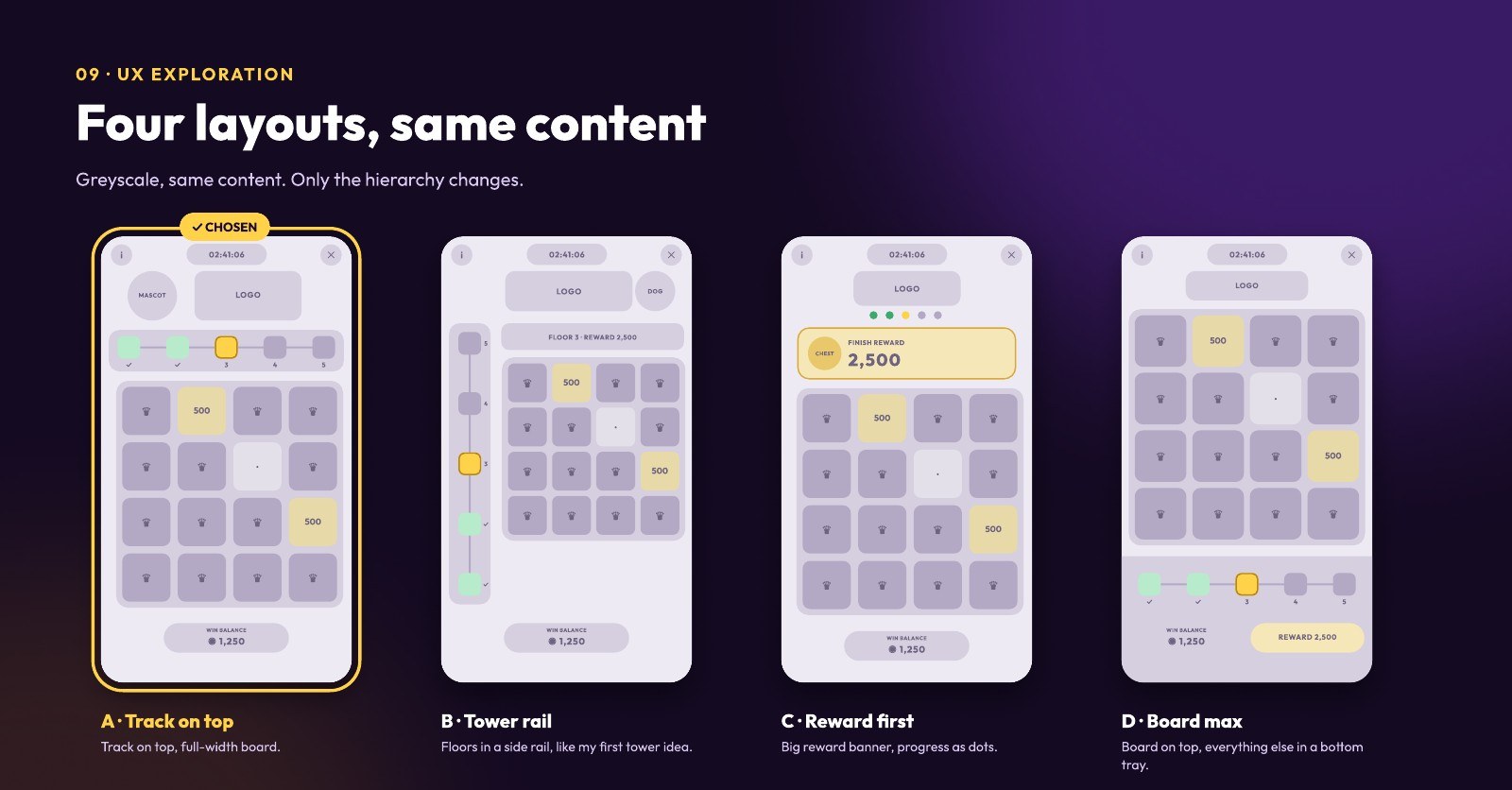
Four layouts, one clear winner.
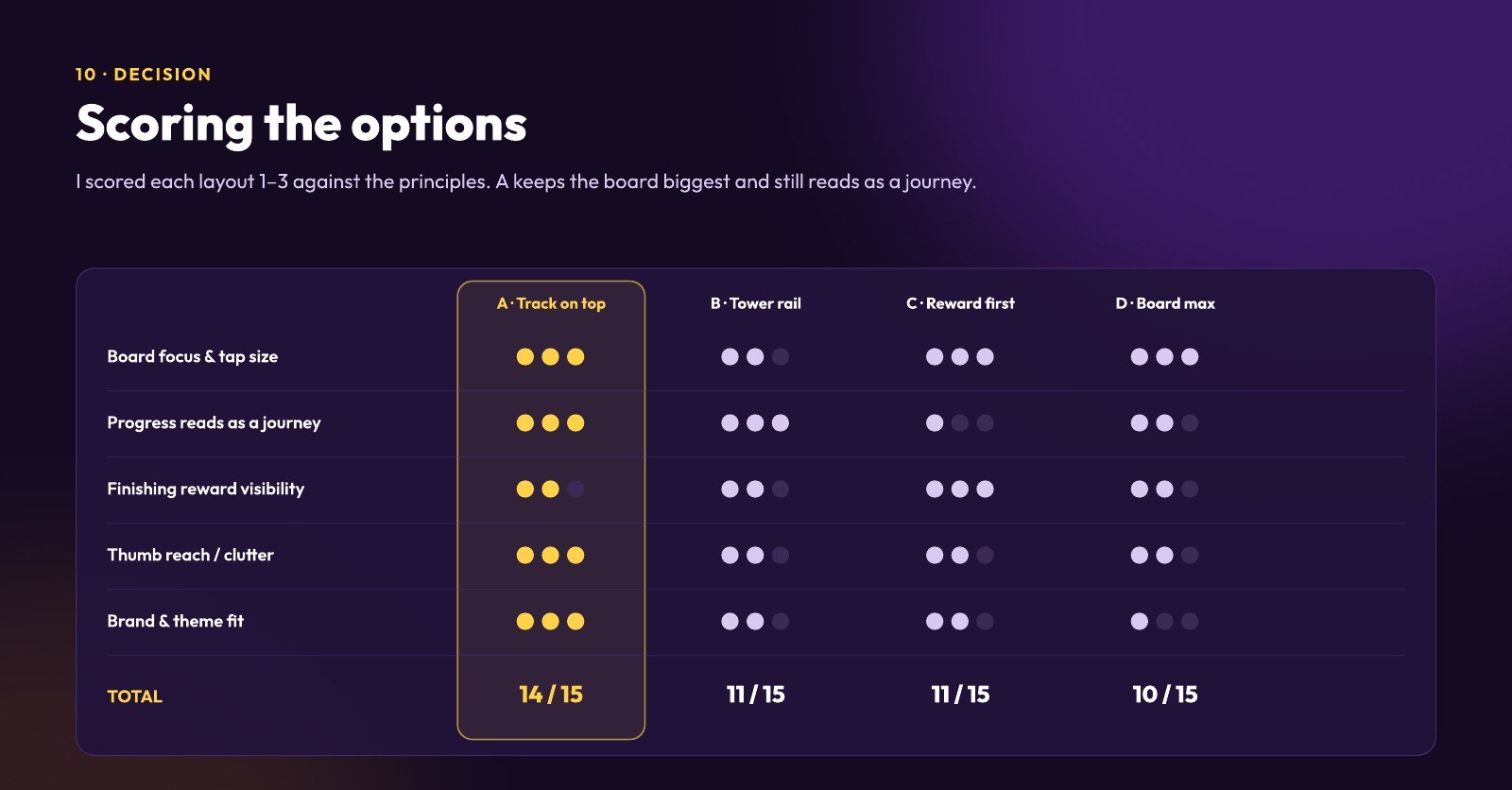
Same content in greyscale, only the hierarchy changes. I scored each option against the principles: board size and tap targets, progress as a journey, reward visibility, thumb reach and theme fit. The track-on-top layout won 14 out of 15.
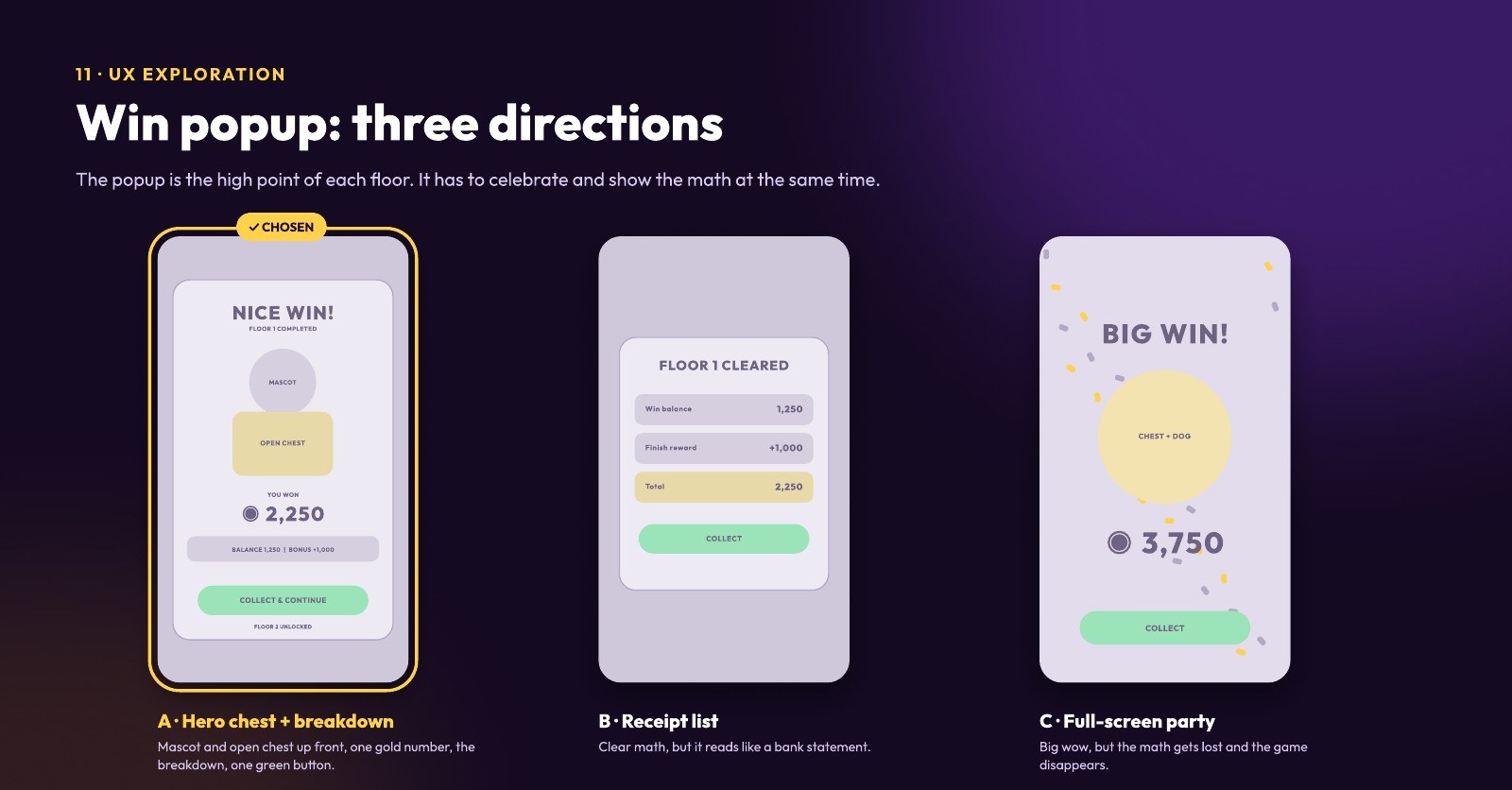
The win popup got the same treatment: a hero chest with a clear breakdown beat both a bank-statement receipt and a full-screen takeover that hid the math.
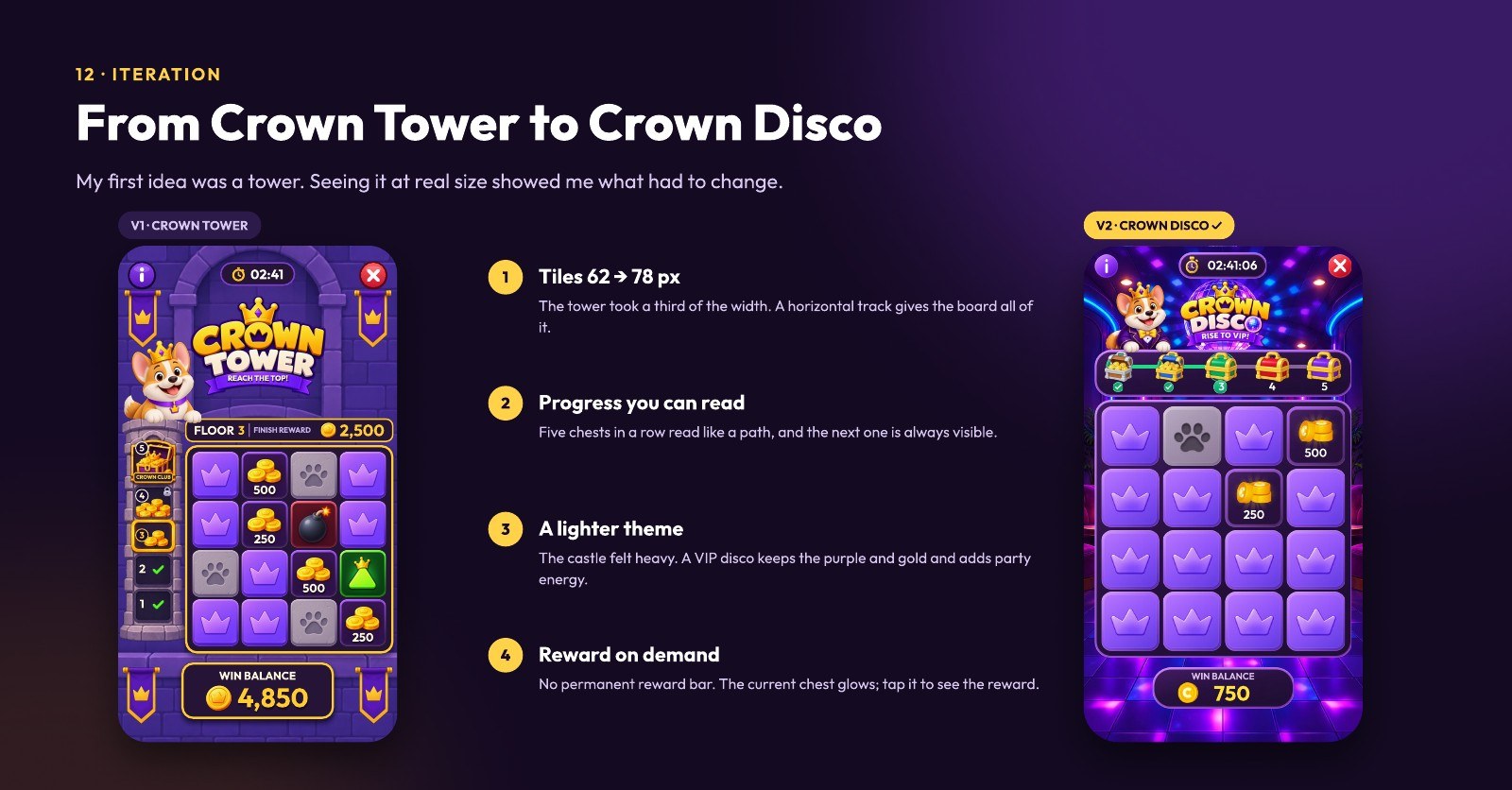
From Crown Tower to Crown Disco.
My first idea was a tower. Seen at real size it took a third of the width and felt heavy. A horizontal chest track gives the board full width, the tiles grew from 62 to 78 px, and a lighter VIP-disco theme brought the party energy in.
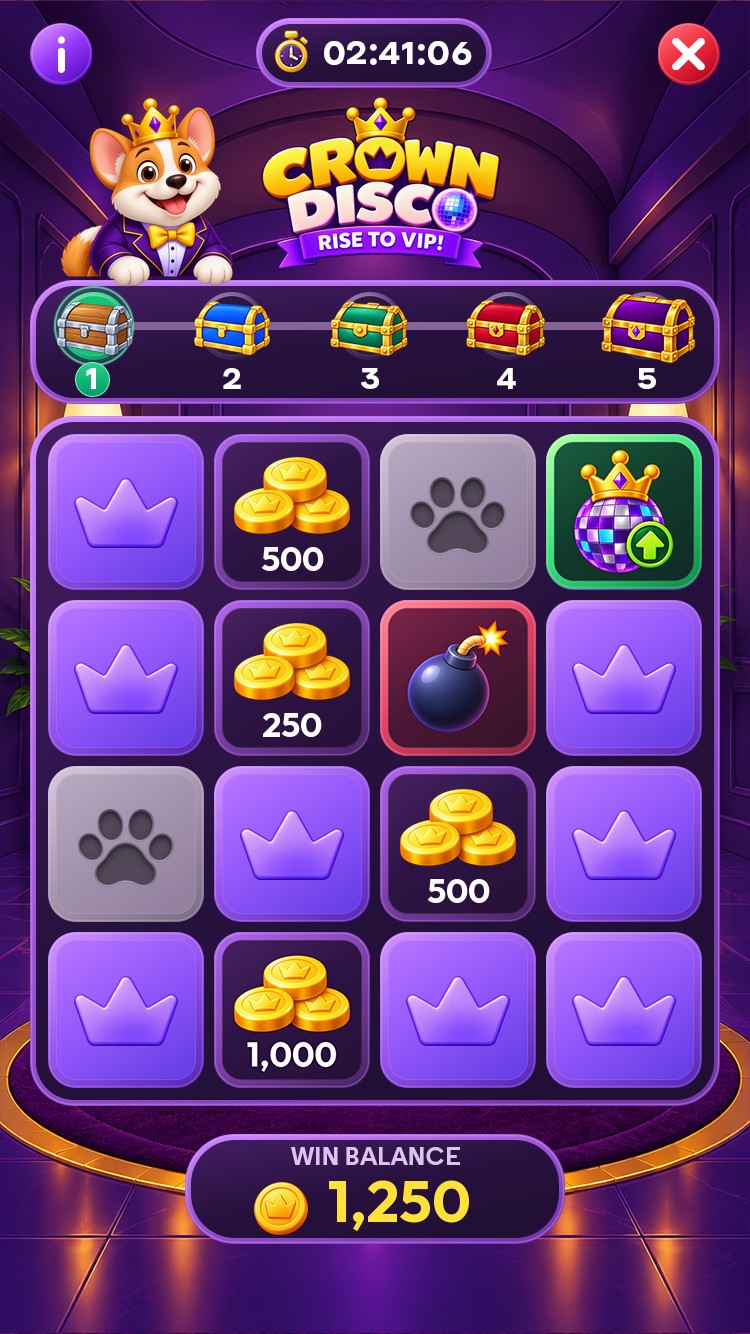
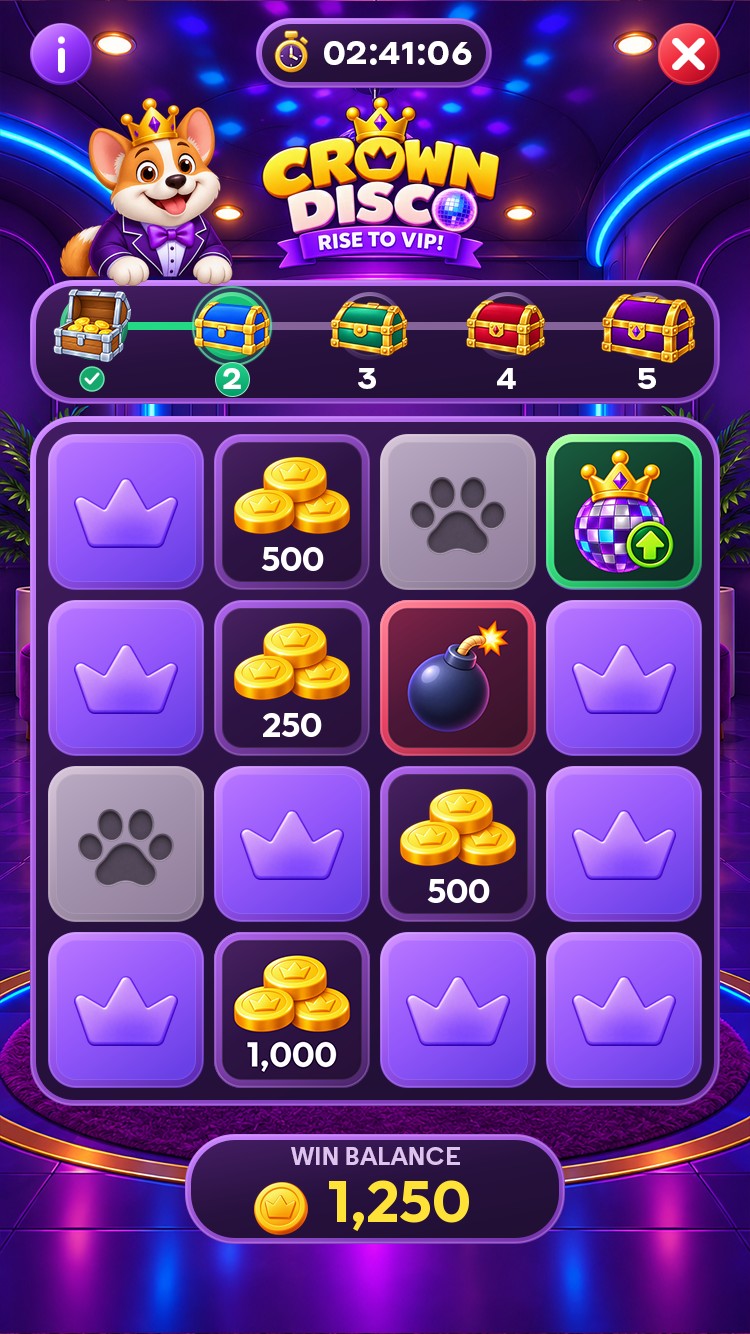
Five floors, one rising journey.
The layout stays identical on every floor, so there is nothing to relearn. Only the stakes change: a new room, more bombs, a bigger chest, and a gold board on the VIP finale.
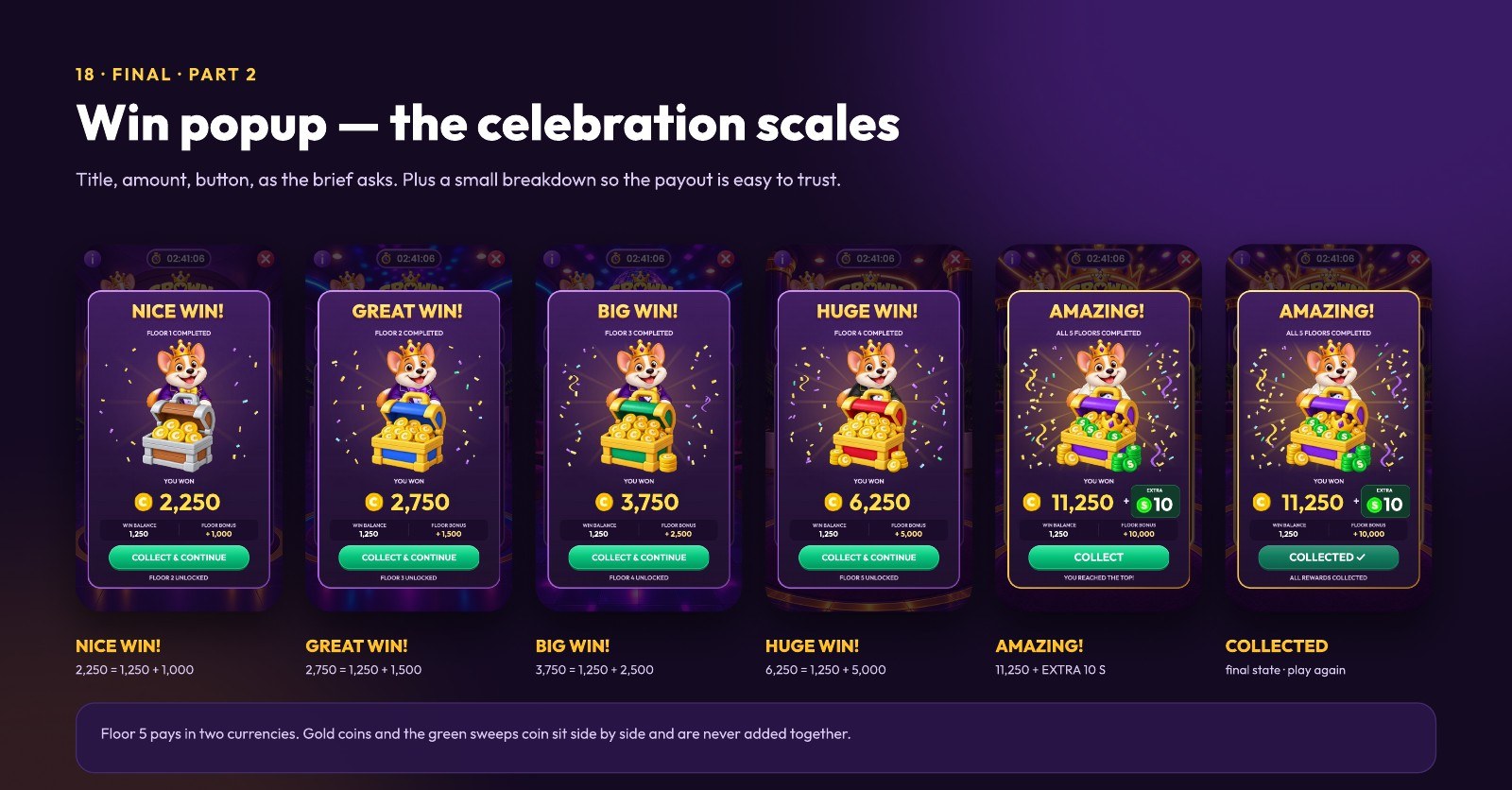
The celebration scales with the win.
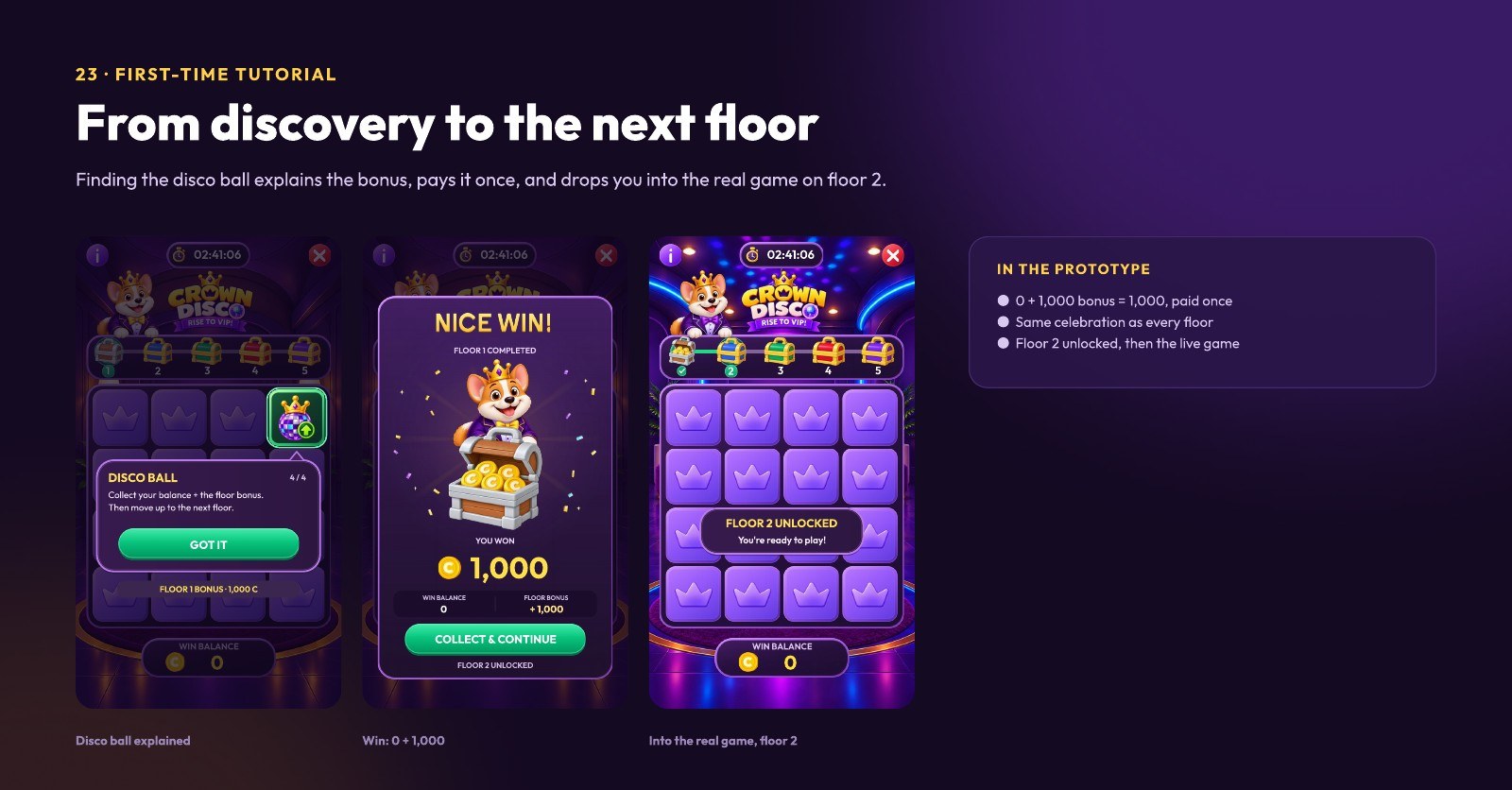
Title, amount and one button, plus a small breakdown so the payout is easy to trust. The popup grows from “Nice win” to “Amazing” across floors, and the last floor pays in two currencies that sit side by side and are never added together.
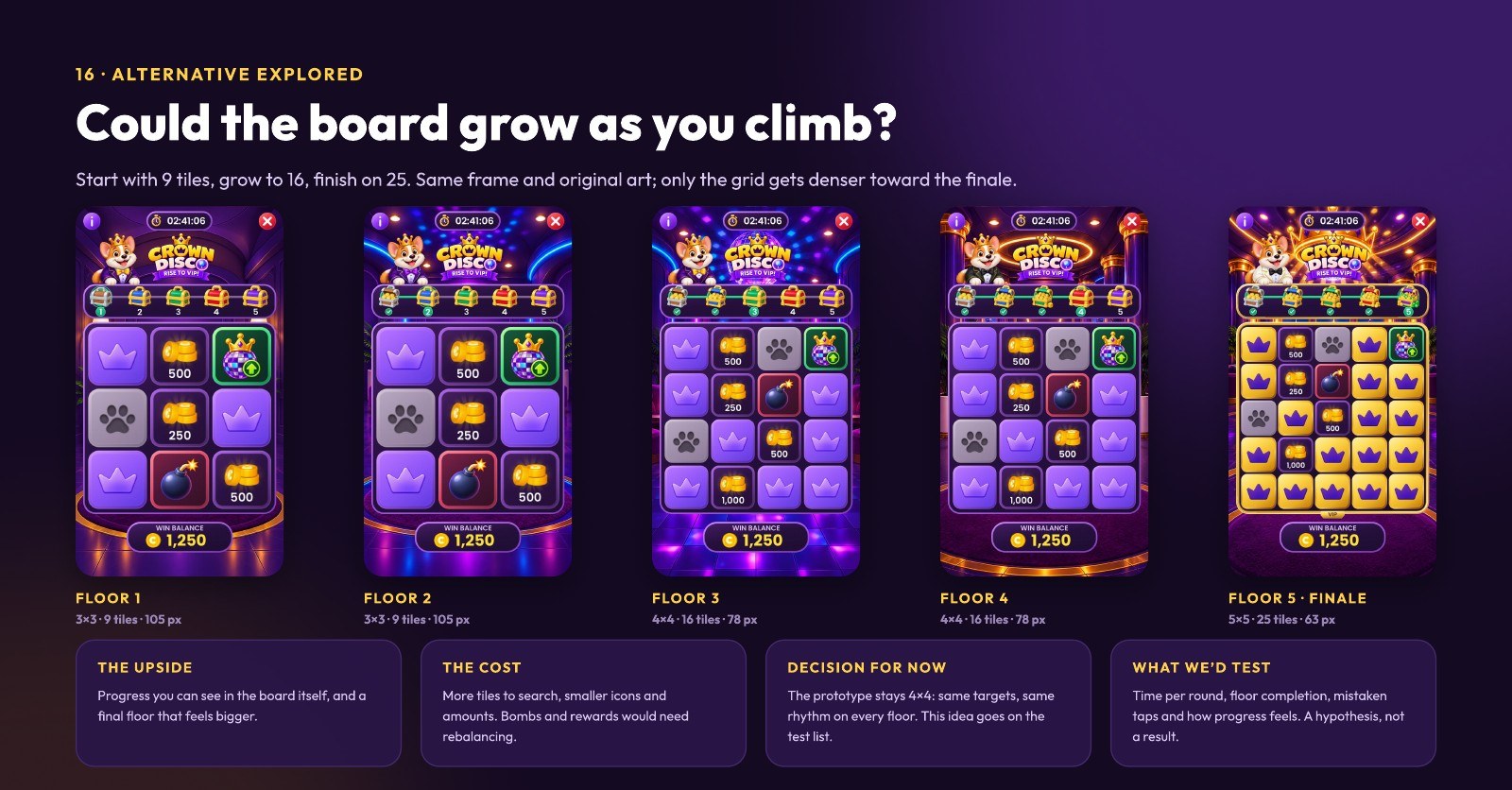
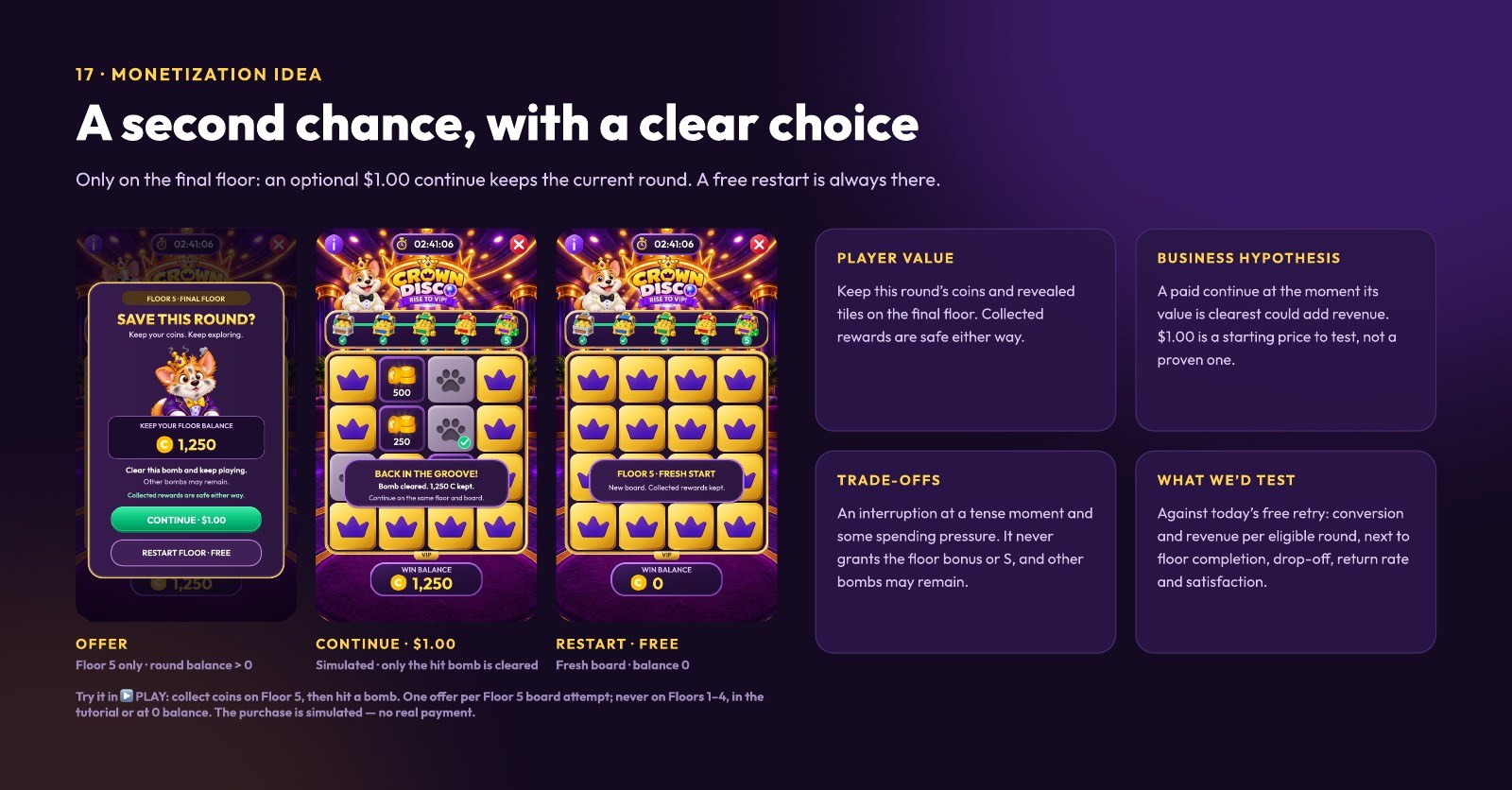
Could the board grow, and could a loss be a choice?
Two ideas kept out of the prototype on purpose. A board that grows from 9 to 25 tiles as you climb, and an optional paid continue on the final floor next to an always-free restart. Both are written up as hypotheses with what I’d test, not as results.
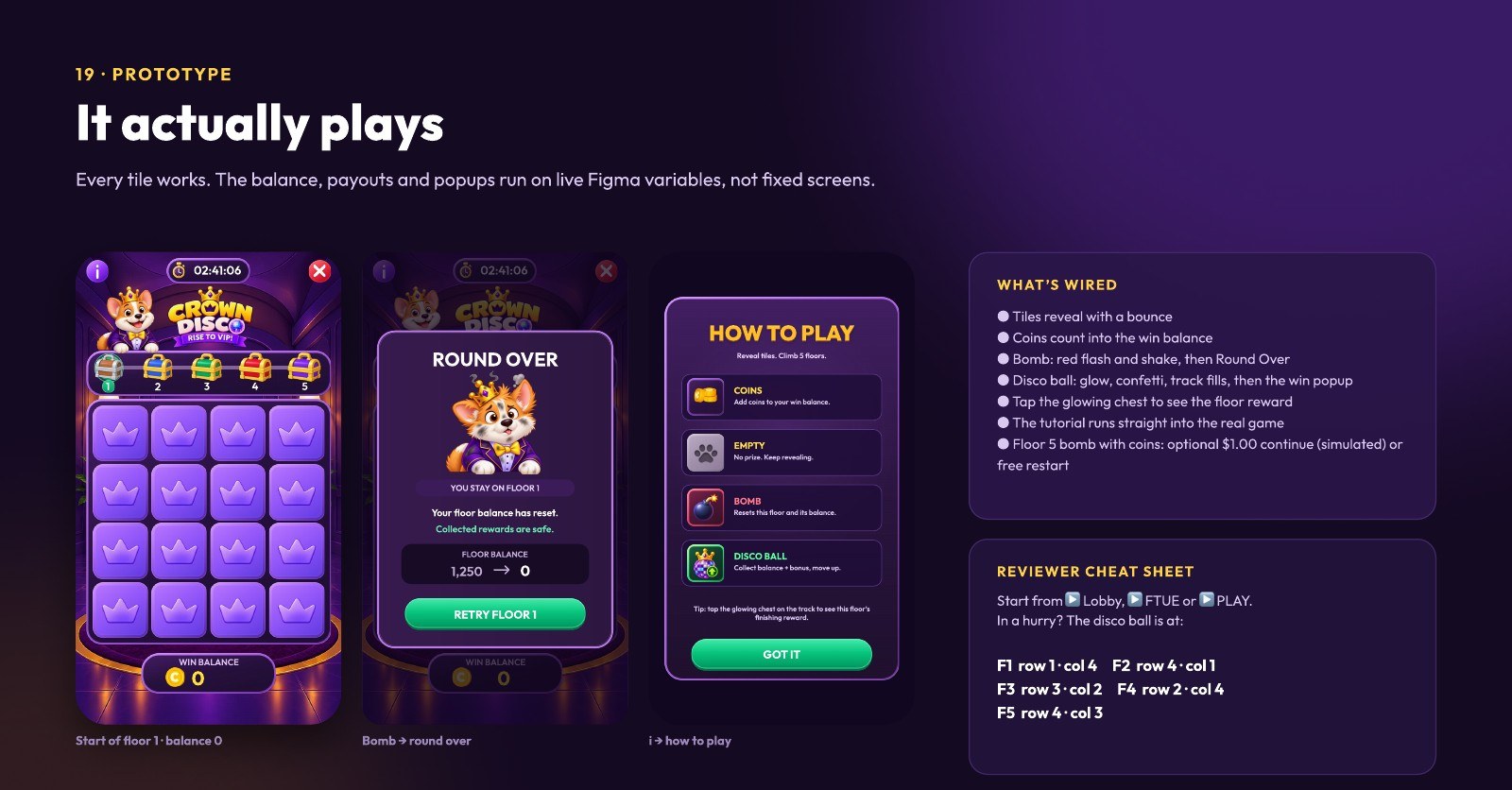
It actually plays.
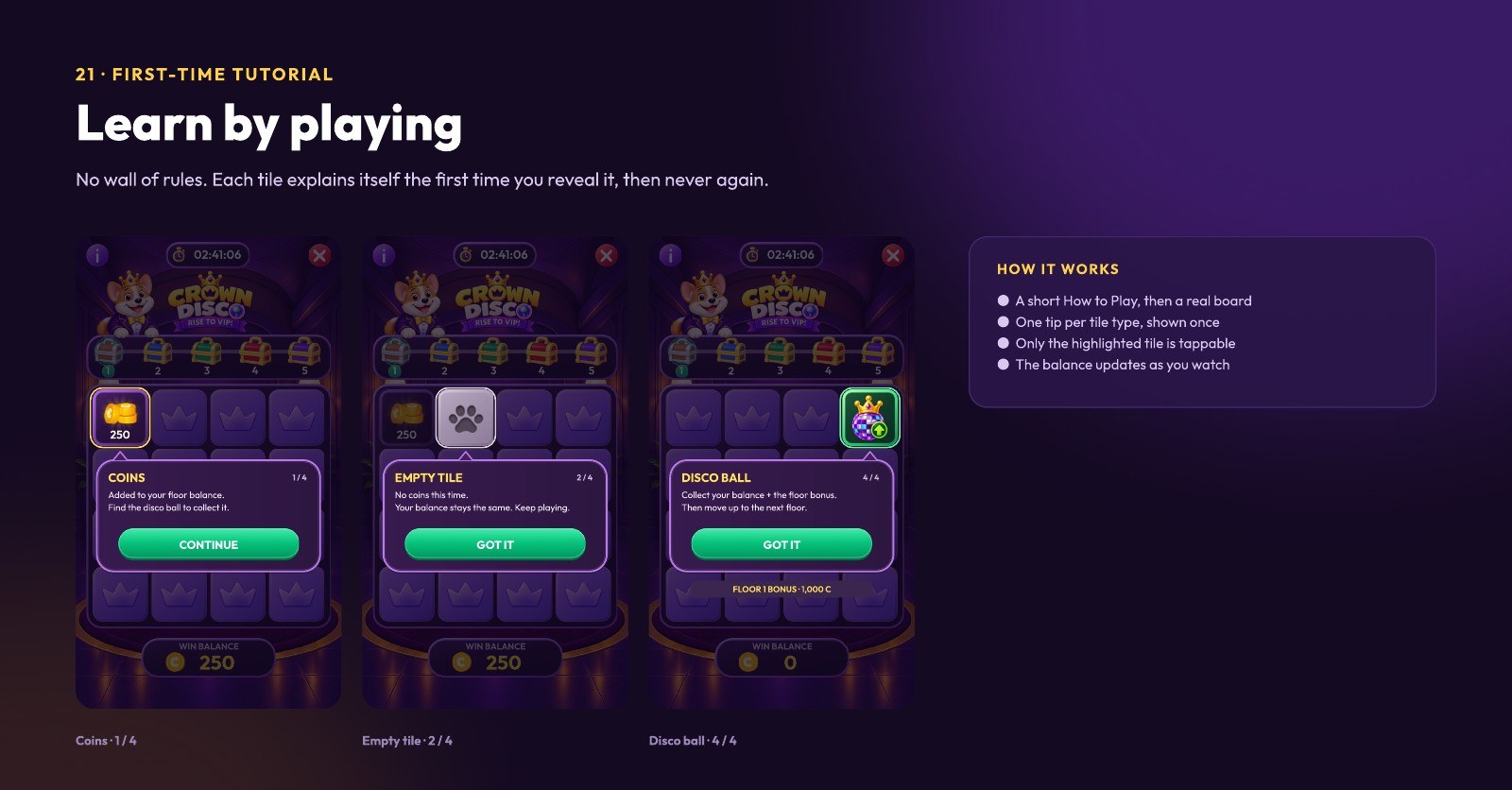
Every tile works. Balances, payouts and popups run on live Figma variables instead of fixed screens, and the first-time tutorial runs straight into the real game: each tile explains itself once, a bomb costs only the current floor, and finding the disco ball drops you onto floor 2.
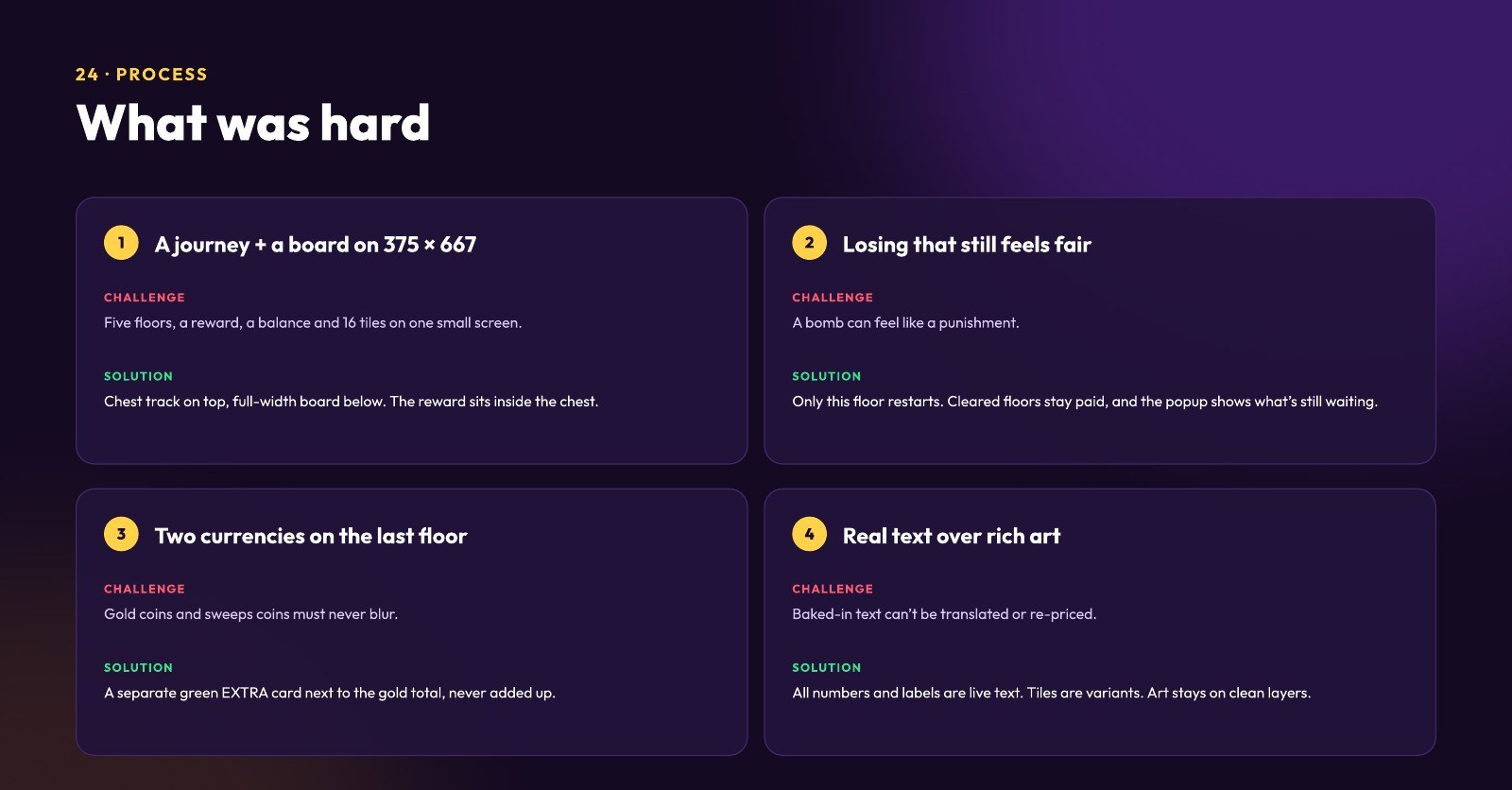
What was hard.
Four problems shaped the final design.